
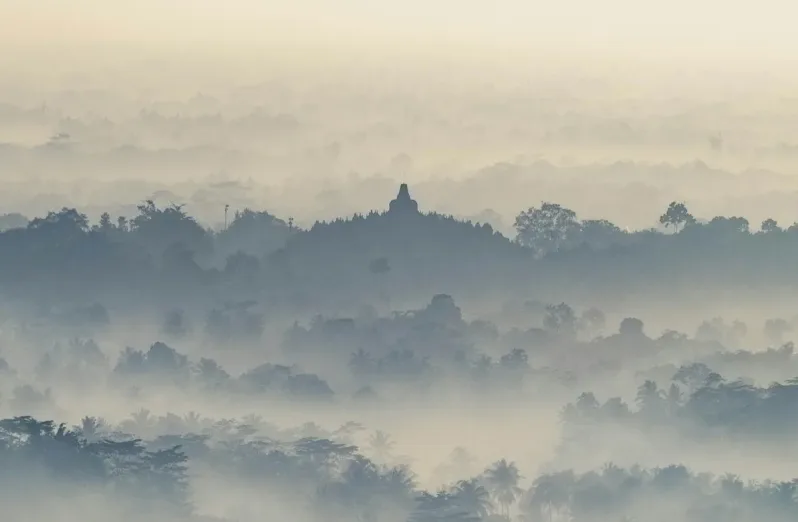
Bob’s Besties, let’s talk about a true giant: Borobudur Temple. Not only is it the largest Buddhist temple on the entire planet, but it’s also one of Central Java’s most iconic, must-visit spots! If you’re currently chilling in Yogyakarta for a holiday, then you’re in luck! This magnificent world wonder is just a short and scenic trip away!
Wondering what the best route is? No worries because Bob has got you covered. Let’s break down all the easy ways to get to Borobudur from Yogyakarta!
Also Read: 7 Historical Places in Indonesia to Satisfy Your Inner Geek
Borobudur Temple: History, Architecture, and Culture
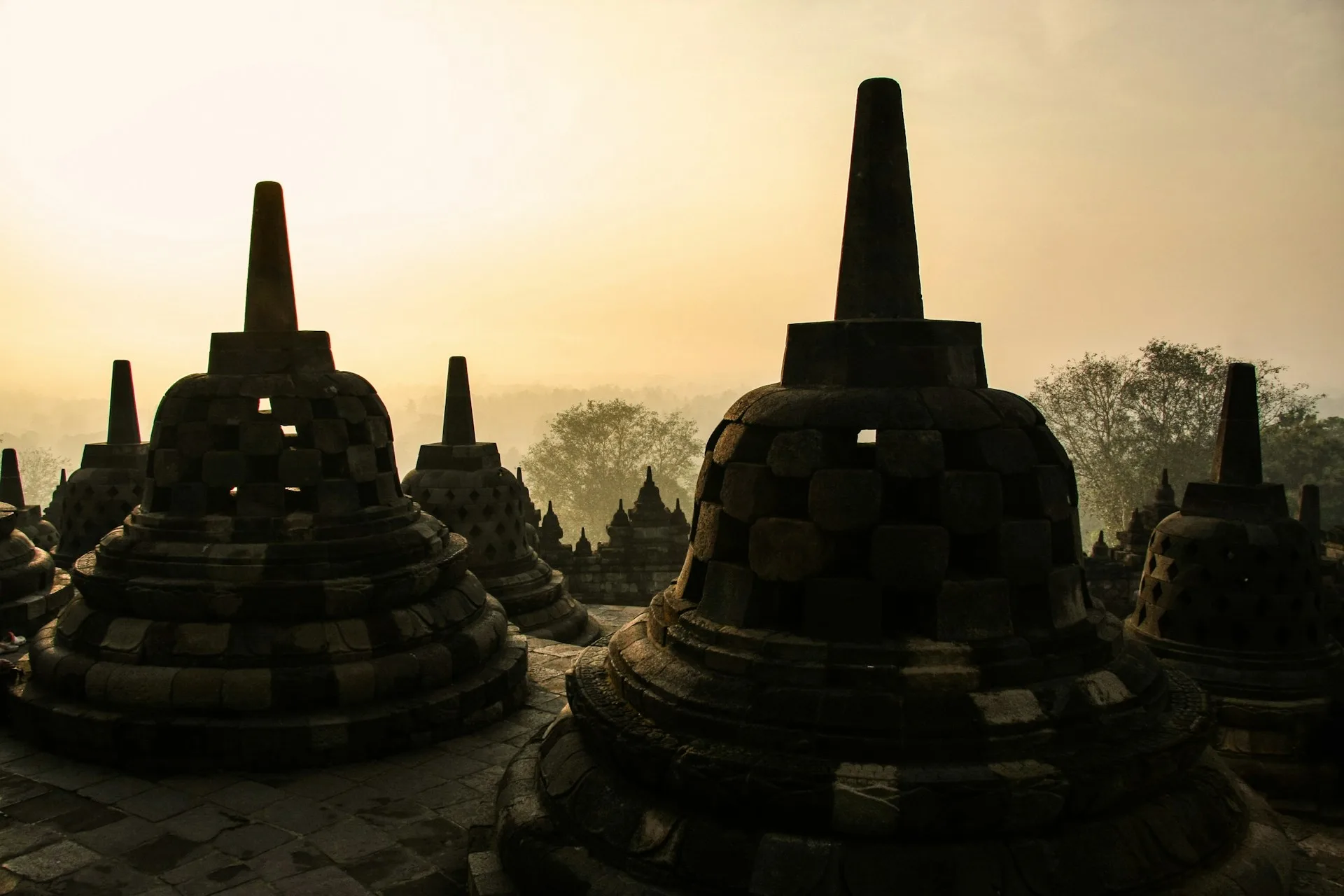
Photo: Mario La Pergola via Unsplash
So, what’s the big deal about Borobudur? Well, it’s not just a massive, beautiful temple—it’s a masterpiece of history, architecture, and living culture all rolled into one! To truly appreciate it, let’s dive into the story behind the stones.
The lost and found history
Believe it or not, this magnificent structure was once lost to the world for centuries! Built around the 9th century during the reign of the Syailendra Dynasty, Borobudur was the spiritual center of Mahayana Buddhism in the region. However, as power shifted and volcanic eruptions from nearby Mount Merapi blanketed the area in ash, the temple was abandoned and reclaimed by the jungle.
It wasn’t until 1814 that it was rediscovered under the administration of Sir Thomas Stamford Raffles. After massive excavation and decades of restoration, including a major project with UNESCO, Borobudur was restored to its former glory for the world to see!
A journey to enlightenment: The three levels
Climbing Borobudur is more than just a walk; it’s designed as a spiritual journey. The temple’s architecture is a giant three-dimensional mandala, guiding pilgrims from the earthly realm to spiritual enlightenment through its three main levels:
- Kamadhatu (The Realm of Desire)
This is the base of the temple, representing the world of everyday human desire and temptation. Its reliefs, which depict scenes of cause and effect (karma), are mostly hidden by a stone encasement, symbolizing the need to overcome the earthly world before ascending.
- Rupadhatu (The Realm of Forms)
The next four square levels make up the Rupadhatu. Here, you’ll find thousands of intricate stone reliefs telling the life story of Siddhartha Gautama on his path to becoming Buddha. The walls are adorned with Buddha statues seated in niches, representing a world where one has been freed from earthly desires but is still bound to name and form.
- Arupadhatu (The Realm of Formlessness)
Finally, you reach the three circular platforms at the top. The architecture becomes much simpler here, with no ornate carvings. This level is home to 72 bell-shaped stupas, each hiding a Buddha statue inside. It represents the highest state of purity and formlessness as the threshold of Nirvana.

A living monument of faith
Borobudur is far from being just an ancient relic. It is a vibrant center for the Buddhist faith, especially in Indonesia. Its most important function today is as a primary site for pilgrimage.
Every year, thousands of Buddhists gather here to celebrate Waisak (Vesak Day), commemorating the birth, enlightenment, and passing of Buddha. A more recent and incredible sight is the Thudong tradition, where dozens of monks undertake a ritual journey on foot, sometimes walking for thousands of kilometers from countries like Thailand, to culminate their pilgrimage at Borobudur for the Waisak ceremony. It’s a powerful testament to the temple’s enduring spiritual significance in the modern world!
How to Get to Borobudur from Yogyakarta
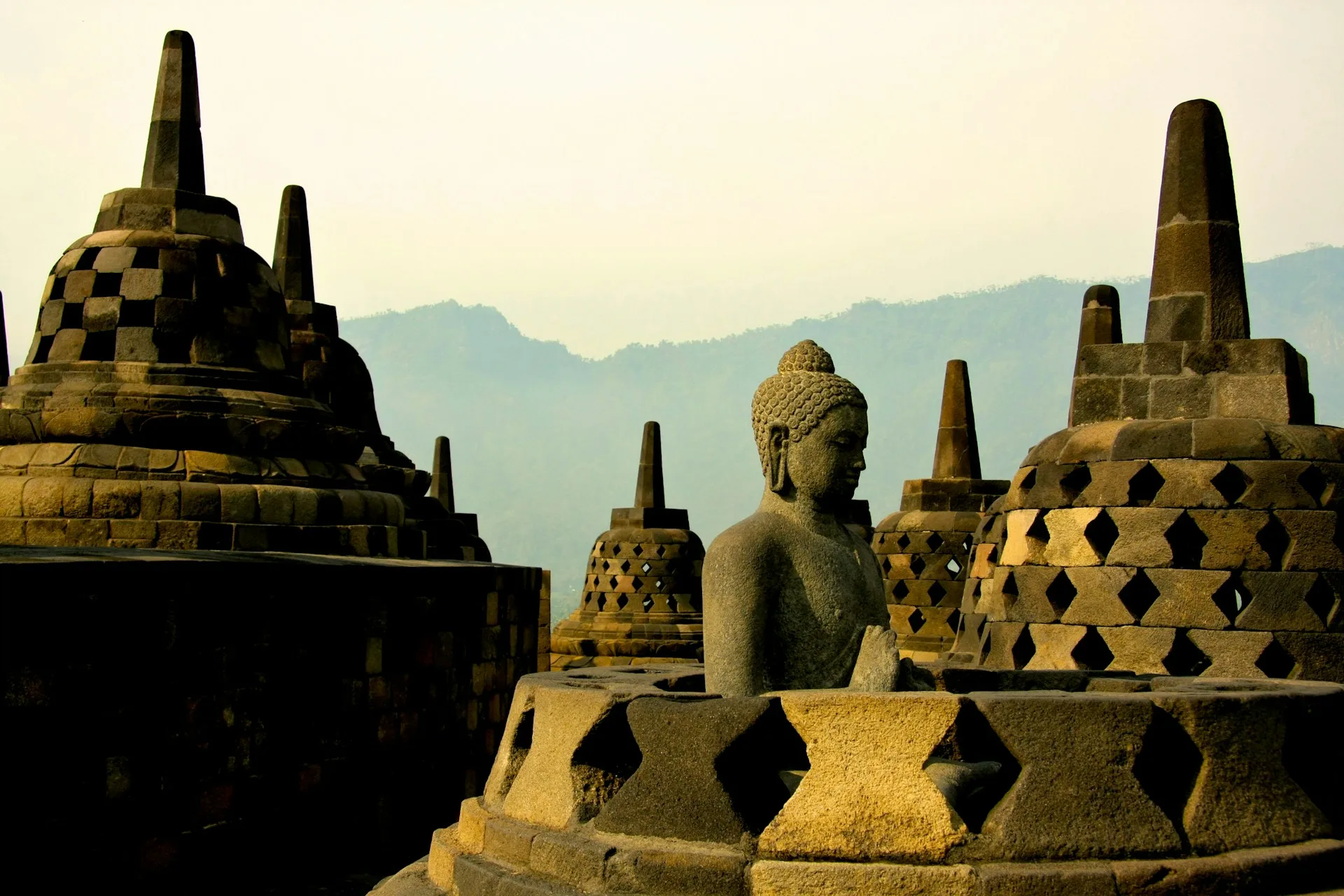
Photo: Mario La Pergola via Unsplash
If you’re in Yogyakarta and ready for an epic day trip to Borobudur, the good news is that getting there is pretty straightforward! The temple is located about 40 km northwest of central Yogyakarta, and you’ve got a couple of great options depending on your budget and travel style. Here’s your cheat sheet on how to get to Borobudur from Yogyakarta!
Bus from Yogyakarta to Borobudur
For the adventurous traveler looking for a local experience (and to save some cash!), taking the bus is a solid choice. It’s the most affordable way to get there.
Your journey starts at Jombor Bus Terminal, located in the northern part of Yogyakarta. From there, you’ll hop on a direct bus heading to Borobudur. The trip follows the main road, Jalan Magelang, and usually takes about 1.5 to 2 hours, depending on traffic and how many stops the bus makes along the way.
This is where you really save! The estimated bus cost will only cost you around Rp25,000 – Rp30,000 per person. For a round trip, you’re looking at just Rp50,000 – Rp60,000!
Bob’s Tip: The buses are usually non-air-conditioned, so try to travel in the morning for a more comfortable ride. The bus will drop you off at the Borobudur Bus Terminal, which is just a 10-minute walk from the temple’s main entrance!
Also Read: Things to Do in Jogja: 14 Top Picks for Your Itinerary
By car or motorbike
If comfort, speed, and the freedom to explore at your own pace are your top priorities, then renting a private vehicle is the way to go. This is a great option if you’re traveling with friends or family.
The route is the same—just get on Jalan Magelang and head north, following the clear signs to Borobudur. With navigation apps like Google Maps or Waze, it’s impossible to get lost! The journey is much quicker, usually taking 1 to 1.5 hours without heavy traffic.
The cost here is a bit more varied, but here’s a general breakdown:
- Motorbike: Around Rp75,000 – Rp100,000 for a 24-hour rental.
- Car (Self-Drive): Starts from Rp250,000 – Rp350,000 for 24 hours.
- Car with Driver: Around Rp500,000 – Rp650,000 for a 12-hour package, which includes fuel.
- Fuel: For a round trip, expect to spend about Rp30,000 – Rp45,000 for a motorbike or Rp90,000 – Rp150,000 for a car.
- Parking Fee: The designated parking area at the Borobudur temple complex is spacious and secure. Parking fees are typically Rp5,000 for a motorbike and Rp10,000 for a car.
Whichever way you choose, the journey is straightforward, and the magnificent view that awaits you is totally worth it, Bob’s Besties!
Also Read: Unraveling the Heritage of Dieng’s Temples
The Smartest Place to Rest After Borobudur? Bobopod Malioboro, Yogyakarta!
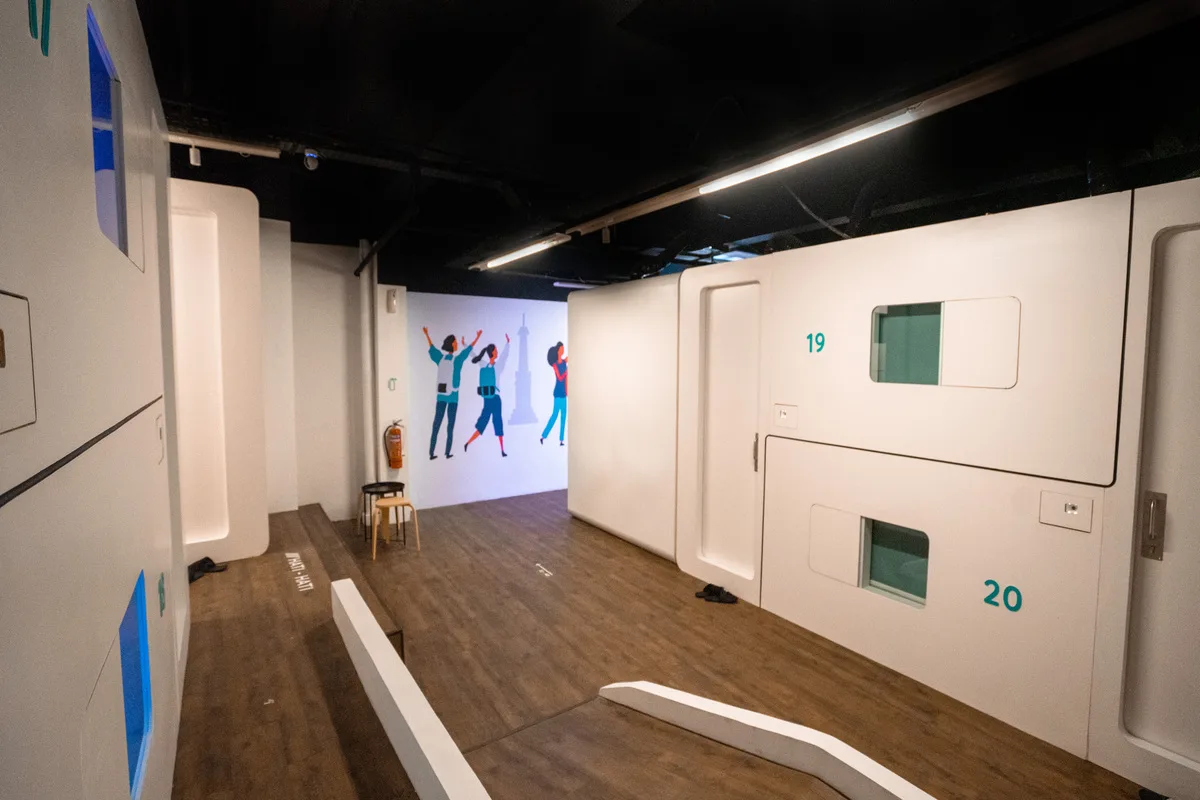
Photo: Bobobox Internal Asset
After a mesmerizing day exploring every corner of Borobudur, you’ll definitely need a super comfy and strategic place to come back to in Yogyakarta. After all, your adventure doesn’t have to end there!
Look no further than Bobopod Malioboro! Perfectly located in the heart of Jogja’s most vibrant area, these high-tech pods are designed to help you recharge in style. Imagine unwinding in your own personal sanctuary, adjusting the ambient lights to your mood, and playing your favorite tunes on the Bluetooth speaker after a long day of walking.
Once you’re rested, the best of Jogja’s culinary and cultural scenes are right at your doorstep. It’s the perfect home base for your Borobudur day trip and all your other Yogyakarta explorations.
Ready for an unforgettable adventure? For the best deals and a seamless booking experience, be sure to book your stay directly through the Bobobox app. Download it now and secure your pod!
Also Read: 10 Must-Visit Indonesian Temples: The Country’s Spiritual Wonders
Writer: Ratna Asih
Featured photo: Sebastian Staines via Unsplash