Planning a trip to Indonesia at some time in the future? Check out this Indonesian food guide to help you discover what food to eat, where to find it, and how to eat like a local!
Indonesia is home to one of the most diverse and flavorful cuisines in the world. With over 17,000 islands and hundreds of ethnic groups, every region offers its own unique dishes, spices, and cooking traditions. It’s for sure one of the best countries to visit for food.
From iconic street food like nasi goreng to rich, slow-cooked dishes like rendang, exploring Indonesian food is a journey in itself. With so many great options, you might be overwhelmed deciding where and what to eat in Indonesia for the first time, and that’s why Bob’s here to help!
This guide should give you a head start on the country’s can’t-miss dishes so you can bookmark a few bites for your next trip. Keep on reading!
Must-Try Indonesian Dishes
Indonesia has an incredibly multicultural population, and so, it offers endless food options. You can easily find any type of food at any hour of the day to whet your appetite and hopefully get you hooked.
From smoky grilled meats to veggie-friendly dishes, there is something for every preference. So, on your next trip to Indonesia, you can’t leave until you’ve had.
1. Nasi Goreng
This Indonesian food guide includes something you can easily find and genuinely enjoy, the famous nasi goreng or fried rice. Simple, filling, flavorful, and comforting, nasi goreng is so good, it’s hard to say no! It’s definitely one of the best Indonesian dishes for foreigners to try.
The dish is usually made with rice, egg, veggies (like cabbage, mustard greens, cucumbers, and tomatoes), and a choice of protein–chicken is the most popular choice. Other options include sausage, beef, mutton, meatball, shrimp, and calamari.
But, you can opt to have the vegetarian one or even the vegan option–simply ask for the dish with no egg.
Also read: A Seafood Lover’s Guide in Pangandaran: Where to Find the Freshest Catches
2. Bubur Ayam
While bubur ayam is available throughout the day, it’s best enjoyed in the morning to kick off your day. It's a comforting rice congee served with shredded chicken.
The dish is typically topped with cakue, fried shallots, chopped celery, fried soybeans, sweet soy sauce, and crackers or kerupuk, which adds a delightful crunch to the dish. And, of course, there is the chili-based hot sauce known as sambal, that adds an intense heating sensation to your meal.
3. Gado-gado

If you don’t eat meat, it’s good to know that the country offers ample vegetarian and vegan alternatives, so you won’t even go hungry. One of the most popular options is gado-gado.
It comprises vegetables like cucumbers, carrots, cabbage, bean sprouts, and greens, fried tofu and tempeh, plus a hard-boiled egg. The food is typically served with rice or rice cake, thick peanut sauce on top, and kerupuk for extra crunch.
Other alternatives to the veggie-friendly options are karedok, lotek, urap, ketoprak, pecel, tempe orek, and stir-fried veggies.
4. Rendang
Rendang is probably one of the first things you think of when it comes to the best Indonesian dishes. Originating from Sumatra, it’s a slow-cooked beef curry simmered for hours in a mix of coconut milk, herbs and spices, and chillies.
Once it reaches an intensely rich flavour and gets incredibly tender, rendang is best enjoyed with rice. Most of the time, rendang is served as a part of nasi Padang and can be enjoyed pretty much anywhere in Indonesia.
5. Bakso

Get a taste of this flavorful meatball soup, and you will understand why this is one of Indonesia’s favorite dishes. Simple, quick, and affordable, bakso is usually made with a mix of ground beef and a certain amount of tapioca flour.
Though beef is the most common, it can also be made with other proteins, including chicken, fish, shrimp, pork, and some combination of minced meat.
In a bowl of broth full of flavor, vermicelli noodles, egg noodles, bean sprouts, and mustard greens are popular accompaniments. Don't worry about the spice level. As a condiment, the sambal is served separately from the food so you can adjust the spiciness to your own liking.
6. Satay

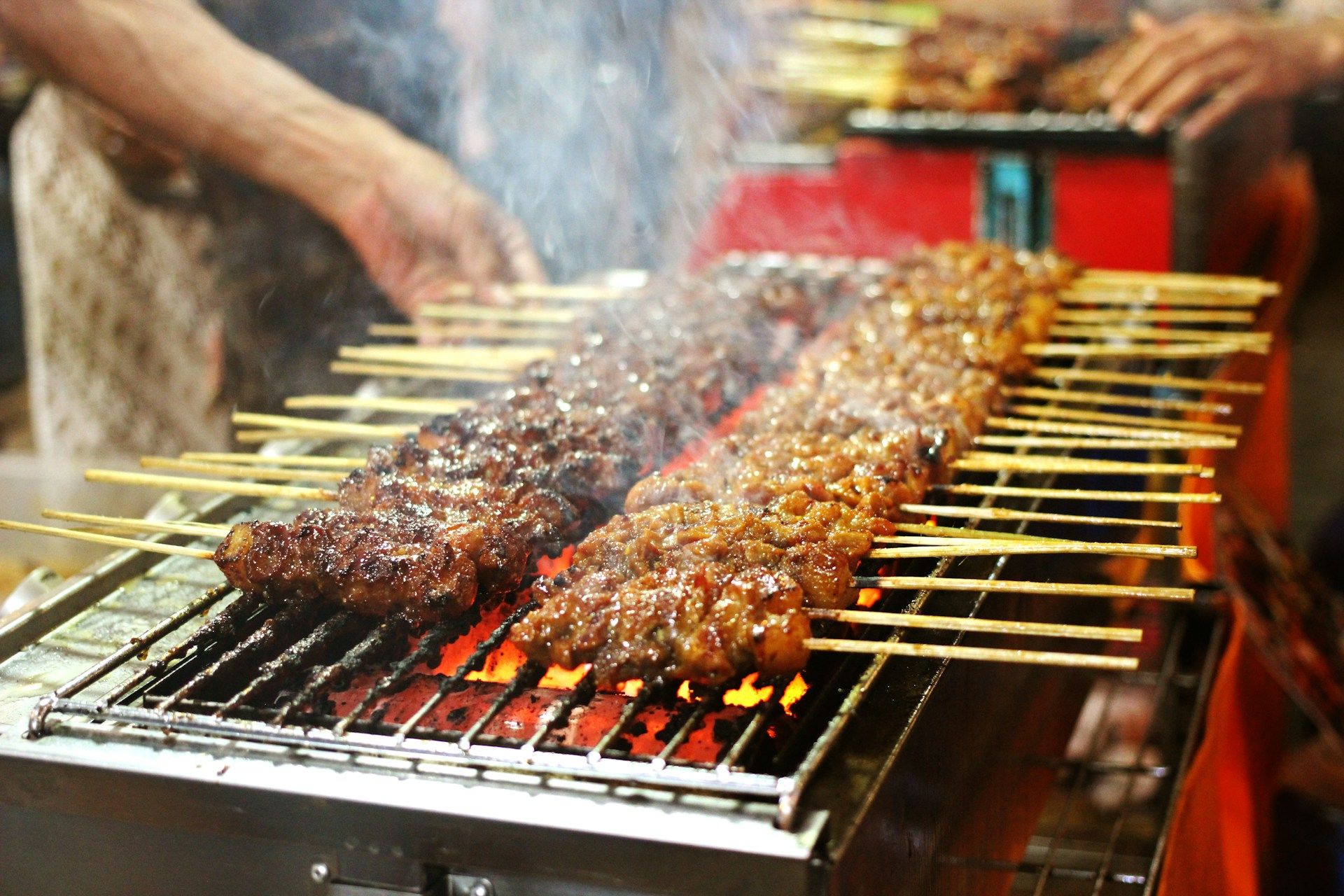
Satay or sate is a seasoned and skewered meat grilled to smoky perfection over hot charcoal. This beloved Indonesian dish is so delicious that you can almost find it everywhere, from street vendors to upscale restaurants.
Many regions of Indonesia have their own typical satay: sate Padang from Padang, sate Madura from Madura, sate lilit from Bali, and sate maranggi from Purwakarta, to name a few.
Satay is typically served with rice or rice cake, a thick peanut sauce, and some pickled cucumbers and shallots.
The best part? It comes in a bunch of different options, including chicken, intestine, beef, mutton, pork, fish, clam, and even rabbit meat. But, of course, you can try the vegetarian versions, though not as popular, like mushroom and tofu.
7. Soto

Just like satay, many variations of soto exist–some with light broth while others are creamy and coconut-based. Soto ayam is one of the most popular dishes that you can see easily across the country. You can think of it as chicken soup.
It's a turmeric-infused broth with shredded chicken, vermicelli noodles, cabbage, lime, boiled eggs, and kerupuk for some added crunch. Best enjoyed with a side of steamed rice, soto ayam is perfect for those looking for something filling, yet gentle and flavorful.
Other versions you shouldn’t miss out on are soto Betawi, soto Lamongan, coto Makassar, soto Medan, and soto Bandung.
8. Nasi Kuning

Fragrant and comforting, nasi kuning is another popular dish consisting of yellow rice cooked in coconut milk and seasoned with turmeric, lemongrass, garlic, and other spices. The dish is topped with several small servings of side dishes.
Instead of ordering à la carte, you can pick out whatever dish you like from the buffet, and the seller will scoop out a serving for you.
Fried chicken, a variety of egg dishes, orek tempe, stir-fried vermicelli noodles, perkedel (potato fritters), some veggies (usually cucumber slices), kerupuk, and sambal are popular accompaniments. Every dish is pre-cooked, and these vary according to the region and seller.
9. Martabak

Anyone with a sweet tooth will love martabak manis: a thick pancake topped with sugar, butter, condensed milk, and plenty of other fillings to choose from. It is sweet, warm, chewy, and buttery–an ultimate comfort food you can’t resist.
Look out for the menu and have something to your preference. You can go for the classic chocolate and peanut version or opt for other toppings like cheese, banana, Nutella, Ovomaltine, matcha, cookie crumbs, black sticky rice, sweet corn, coconut, and much more.
If you prefer savory bites, you will be pleased to learn that this dish comes in a savory version, called martabak telur. Crispy and golden on the outside, this type of martabak is stuffed with eggs (telur), minced meat (beef or chicken), and spring onions.
Martabak telur is usually served with a sour dipping sauce and hot sauce. Unless you add the hot sauce or some bird’s eye chillies, it is not spicy at all–a perfect choice for those who want to experience Indonesian flavors without setting your mouth on fire.
10. Gorengan

Don't go home until you have tried gorengan and found your favorite! Wrapped in a small paper or plastic bag, gorengan is basically a variety of Indonesian deep-fried snacks, with some being coated in batter.
Vegetables (such as carrots and cabbage), cassava, fermented cassava, banana, sweet potato, breadfruit, tofu, tempeh, and more–all are deep-fried to crispy perfection.
Yes, gorengan is not healthy–clearly not for those on a diet–and it’s not the most glamorous food, but absolutely delicious and also really cheap. You can find these at street vendors across the country, so try a few to see which you like the most.
Also read: 10 Best Foods in Jakarta You Must Try at Least Once
Most Popular Indonesian Drinks to Try
With so many foods to try during your trip, what do you wash them down with? Fret not, this Indonesian food guide includes some of the best drink options to add to your bucket list.
1. Coconut Water

The drink that surely defines the Indonesian tropical climate has to be young coconut water (air kelapa muda). It isn’t just refreshing, but also naturally sweet and packed with nutrients, making it an excellent choice for hydration or just cooling down after a long day.
These drinks are sold pretty much everywhere, so you might just have your fair share of fresh coconuts while there. Be sure to ask for a spoon to scoop out the white gel-like meat inside. Don't ever leave without finishing this healthy fat!
Alternatively, you can find es kelapa muda stalls that offer additional crushed ice, syrups, and juices (lime, orange, mango, or avocado). But keep in mind that this version typically has a lot of sugar.
2. Es Cendol

No Indonesian food guide is truly complete without something sweet and icy cold to balance out all the spicy and savory bites. One you shouldn’t miss out on is es cendol.
It's a mix of coconut milk, a palm sugar syrup, crushed ice, and weird-looking green jellies made from rice flour and pandan leaves. Depending on the region, other toppings can be added for more taste and crunch, like sliced jackfruit and durian. It's not only great to enjoy in hot weather, but also a refreshing alternative to a post-dinner dessert.
3. Wedang Uwuh
As the sun sets and the temperature drops, it’s the perfect time to try wedang uwuh. Served unfiltered, this traditional drink contains a mix of spices, including ginger, sappanwood (which gives the drink its red color), cloves, clove leaves, nutmeg, cinnamon, cinnamon leaves, and more.
Directly translated as ‘trash drink’, wedang uwuh is best enjoyed in the evening or during cooler weather. A sip of this alone will make you feel a hot, zingy sensation inside your throat. It is believed to have a number of health benefits and really does a good job of warming you up.
4. Bir Pletok
It might be called a bir or beer, but trust me, bir pletok won’t get you drunk. Originating from Betawi (an ethnic group native to Jakarta), it’s a sweet and spicy red drink made using a combination of sappan wood, ginger, lemongrass, pandan leaves, palm sugar, cinnamon, and more.
Served chilled over ice, each sip of bir pletok offers a burst of sweetness, warmth, and coolness in the most intriguing way-perfect for a sweltering hot day in Jakarta. Be sure to shake it first to get a good foam similar to that of a beer.
5. Bajigur
Cold days in Indonesia call for a warm cup of something soothing like bajigur. Originating from West Java, each sip greets you with the rich, creamy texture of coconut milk, the sweetness of palm sugar, the warmth of ginger, and the delightful aroma of pandan leaves.
This drink will absolutely warm up your entire body and uplift your mood. Enjoy this in the evening with traditional local snacks like steamed or boiled bananas, sweet potatoes, cassava, sweet corn, and peanuts.
6. Es Pisang Ijo
Es pisang ijo is one of those Indonesian dessert drinks that requires you to eat it with a spoon. Originally from Makassar, this green banana iced dessert is so popular that you can find it pretty much everywhere in Indonesia, from roadside stalls, food courts, to proper sit-down restaurants.
It basically contains steamed bananas wrapped in green flour dough (then sliced into smaller pieces), a red banana syrup, crushed ice, bubur sumsum (rice flour and coconut milk porridge), and condensed milk. It results in a refreshing drink that will leave you craving more.
7. Jamu
Jamu might not be for everyone, but it feels wrong to leave out this bitter-tasting herbal tonic from this Indonesian food guide. Unlike other drinks, jamu is not solely designed to quench your thirst.
With recipes passed down through generations, jamu is claimed to have many health benefits: easing period pain, lowering blood pressure, aiding digestion, reducing muscle aches, boosting immune function, improving skin health, and more.
Each region has its own versions of jamu, but kunyit asam (turmeric and tamarind) and beras kencur (rice and aromatic ginger) are the most well-known.
Traditionally, the tonic is consumed in small doses with the addition of palm sugar or honey if you prefer a sweet-tasting one. You can find it sold by female jamu sellers in the morning or at jamu cafes, hotel restaurants, and grocery stores.
8. Avocado Juice

Avocado juice or jus alpukat is a must-try for anyone with a sweet tooth. Jus alpukat is a blended mix of avocado, water, ice, sugar, and condensed milk. This milkshake-like drink is then served in a tall glass or plastic cup with chocolate drizzled inside.
The texture is thick and creamy with the right amount of sweetness–making it a perfect treat for a hot day in Indonesia. You will spot this at roadside stalls, cafes, and restaurants.
Yes, you read it right! Many people might think of avocado as a savoury food, but most Indonesians use this in drinks with sugar to boot. However, there are a few variations that exclude sugar, use fresh milk, mix it with Milo (chocolate drinking powder), or even blend it with coffee.
9. Sweet Iced Tea

On a hot day in Indonesia, nothing compares to a glass or cup of sweet iced tea, aka es teh manis. Of course, you can go for the plain one (teh tawar) or ask for ‘less sweet’, which is no less refreshing.
But, still, the combination of sugar and ice is a definite boost to the system after you have had too much fun in the sun. Plus, it’s perfect for cooling down after all the spicy food. The drink can be found nationwide, from the roadside, small eateries, cafes, to restaurants.
10. Es Teler
When the sun is blazing in Indonesia, you’ve got to cool down with es teler. The drink is essentially a bowl of shaved or crushed ice topped with avocado, young coconut meat, jackfruit, coconut milk, and syrup.
Some versions–with a more modern twist–include condensed milk, durian, some variations of jelly, tapioca pearls, grated cheese, and even cream cheese. And, what’s more? Es teller comes in different types of containers.
Whichever you end up trying, this beautiful mixture of different flavors and textures is absolutely refreshing and a highly addictive dessert drink. You couldn’t possibly miss this off your list.
Also read: 10 Things to Know Before Visiting Indonesia: A Practical Guide for Your First Trip
Food Tips for First-Time Visitors to Indonesia
Still not tempted to fly off to Indonesia and try all the delicious food? Anyway, check out these practical tips before you go for a smooth experience!
Street Food vs Restaurant

One of the first things you’ll notice is that Indonesia has such a wealth of wonderful eateries, from street food spots (markets, roadside stalls, and food carts) to proper dining establishments like restaurants.
Each offers a tempting array of dishes with prices to suit all budgets. And, the secret to a great and smooth experience might lie in knowing which one suits you the most.
Street Food
Both can basically be a hit or miss affair. But, price-wise, street food is best enjoyed for those looking for affordability with delicious and authentic taste. It costs IDR 5k-50k per meal (depending on what food you buy).
Plus, meals are usually prepared and served quickly, making it a great option for those who want a fast meal. But, of course, you need to keep in mind that street food vendors don’t typically provide comfortable seating unless you love to eat al fresco.
Street vendors tend to have extremely limited menus as they often focus on one or a few specific dishes. On top of that, their hygiene and safety often raise concerns, but this doesn’t apply to all vendors because you can always find those who take the matter seriously.
Restaurants
Restaurants, on the other hand, offer comfort, a good ambiance, great presentation, and visually stunning backdrops to your dining experience. This kind of place is also known to have high hygiene standards to ensure the health and satisfaction of customers.
And, what’s more? Restaurants typically provide a relaxed atmosphere so you can enjoy your meals comfortably. Plus, there is a wide variety of dishes to choose from including appetizers, main courses, desserts, beverages, and specialty meals.
Price-wise, though, restaurant meals are usually more expensive due to higher operational costs like service, rent, and staff salaries. It will set you back at around 80k-150k per meal. It also takes longer for them to prepare and serve the food. On top of that, the food flavors tend to be subtle and mild, thus reducing the authenticity of traditional recipes.
As for rude food service staff, there could be a lot of reasons: poor social skills and understanding, staff shortage, long exhausting hours of working, disrespect from management, and more.
Anyone can have a bad day, and you might be unlucky when they take it out on you. Again, it can be a hit and miss affair whether you are enjoying street food or restaurant meals. You can always check the reviews to avoid disappointment.
So, which one is better? It depends on your personal preferences. Street food is great if you are on a budget and want something quick, delicious, and authentic. But if you prefer a comfortable dining environment with diverse menu options and higher standards of cleanliness, restaurants are the ideal choice.
Also read: 9 Best Chinese Restaurants in Bali That Won’t Disappoint
Spice Level

Most Indonesians love putting sambal–be it raw or cooked (boiled or fried)–on all their food. That's why you can always spot this spicy chili-based condiment in every single restaurant or eatery that sells savory dishes. Of course, the hot sauce can vary from region to region.
Even though no two chefs prepare sambal the same way. Some are spicy and salty, while others are sweeter. The simplest one is usually made with chilies and water only. It is a popular accompaniment for bakso, soto, satay, and other dishes that only need sambal for their kick.
Another type of sambal–typically made with chillies, shallots, tomatoes, garlic, fermented shrimp paste, as well as salt and palm sugar-is best served as a side to fried or roast chicken, fish, duck, tofu, tempeh, omelette, rendang, stir-fried veggies, and much more.
It also comes in different spice levels:
- Tidak pedas (not spicy)
- Sedikit pedas (a little bit spicy)
- Sedang (mild/medium/average)
- Pedas (spicy)
- Sangat pedas (very spicy)
For most Indonesians, the hotter the better. But if you can’t handle it, the taste may come as a shock to you. So, just take your time by trying small portions and build on that. It might upset your stomach at first. But once you get used to the taste, you might enjoy and like sambal a lot.
The effort is well worth it!
Indonesian Food Terms
Here are some Indonesian food terms you might come across or come into use when you are wandering through Indonesian street food scenes:
- Goreng (for nasi goreng, mi goreng, bihun goreng, and kwetiau goreng): stir-fried/wok-fried
- Goreng (for ayam goreng, bebek goreng, ikan goreng, gorengan, and such): deep-fried
- Bakar: grilled
- Rebus: boiled
- Kukus: steamed
- Oseng: stir-fried
- Pepes: food steamed and wrapped in banana leaves
- Panggang: roast
- Asap: smoked
- Pedas: spicy
- Es: ice
- Sayur: vegetables
- Susu: milk
- Teh: tea
- Enak: delicious/tasty
- Enak sekali: so delicious/tasty
- Tidak pedas: not spicy
- Jangan pakai pedas: no chilli, please
- Manis: sweet
- Asam: sour
- Asin: salty
- Nasi: rice
- Mie: noodles
- Minuman: drinks
- Makanan: food
- Cabe rawit: bird's eye chili
- Besar: big/large
- Sedang: medium
- Kecil: small
- Mau berapa: how many do you want?
- Mau pedas: do you want it spicy?
- Mau pakai cabe: do you want some chilies?
- Bungkus: take away/take out/to go
- Makan di sini: eat here/for here/eating in
- Dipisah: on the side
- Lauk: side dish
- Yang banyak: a lot
- Warung makan: small eateries
- Makanan kaki lima: street food
- Lalapan: raw vegetables
- Ayam: chicken
- Sapi: beef
- Kambing: mutton
- Bebek: duck
- Ikan: fish
- Babi: pork
- Telur: egg
- Udang: shrimp
- Pisang: banana
- Berapa harganya: how much is it?
- Kembalian: change
- Buka: open
- Tutup: closed
- Selamat makan: enjoy your meal
- Ada makanan vegetarian: do you have vegetarian food
- Warung makan: small family-run eateries
- Warung: small family-run convenience stores selling drinks, snacks, and other grocery items.
- Nggak pakai gula: no sugar
- Nggak pakai MSG: no MSG
Is it Safe to Eat Street Food?

Street food is generally safe and enjoyable as long as you choose vendors with clean preparation areas, high food traffic, and freshly-cooked dishes. But, if you are very wary of their hygiene, better check these practical tips to help you explore street food without compromising your health and comfort:
- Tap water is not recommended for drinking. If you are not sure about the hygiene of the water provided by street vendors, carry bottled water instead.
- Start taking probiotics for 1-2 weeks prior to traveling to build up those helpful bacteria to seed in your gut.
- Find busy stalls that most locals go to–the high turnover of food means it is freshly cooked.
- Watch how the food is being cooked; nasi and mi goreng are usually a safe bet as they are wok-fried in front of you, which equals fewer gems.
- Soup, fresh off the grill or coals, and other dishes served out of a bubbling pot are generally safe.
- Always wash your hands. Some street vendors typically provide a small bowl of water with lime slices in it for you to wash your hands. Some even have access to proper sanitation facilities.
- You can also opt to carry a hand sanitizer as well as dry and wet hand tissue to clean your hands and the utensils.
- Avoid spicy food if you have low spicy food tolerance.
- Fresh coconut water to the rescue. Get some as soon as you start getting a stomachache or if you are scared of food poisoning. Alternatively, you can try getting some jamu, Tolak Anging, or Norit brand to treat your digestive issues.
- Whenever possible, observe! You can take a look at the vendors’ setup: the cooking and dishwashing areas, how and where they store their food, where they get the water or ice in case it is made with unfiltered water, and so on.
- Ask about ingredients if you have some dietary restrictions. Indonesian dishes often contain shrimp paste. Some food might seem vegetarian, so it's good to double-check.
- Always have a small medical kit tailored to your needs with you. Make sure it is stocked with general preventative meds, including treatment for diarrhea.
How to Eat Like a Local
Here are some helpful tricks for eating like a local whenever you travel to Indonesia:
- Indonesian food’s spicy level is on another level. Not all Indonesian dishes are spicy, though, and not all Indonesians like their food fiery. Just like a local, you can always say “tidak pedas” (not spicy) or “jangan pakai sambal” when ordering. Many vendors are accustomed to adjusting the spice level. But why not try the mild (sedang) one to experience a bit of the fiery taste.
- If you eat at a warung makan and don’t know the names of the food, point at what looks good and entices you the most. Simply say, “Mau yang ini” (I want this one). Indonesians are super friendly and will gladly help you choose.
- Indonesian food includes a lot of aromatics, like ginger, galangal, lemongrass stalks, kaffir lime leaves, and bay leaves. These are not meant to be consumed. So, whenever you encounter one in your meal, just leave it alone.
- Sambal, sweet soy sauce (kecap manis), vinegar, and lime are popular condiments for food like bakso, soto, bubur, and satay. They are served separately from the food, so you can control how much you would like to add. But be sure to mix them with your food instead of adding some to every bite. Take bakso as an example. Add the condiments, mix everything so the flavors are evenly distributed, and every bite is well-balanced.
- Indonesians generally eat with their right hands. Knives are rarely used at the table. Instead, use a spoon (right hand) and fork (left hand) for eating nasi goreng, mie goreng, bakso, soto, bubur, and other dishes with soup, gravy, or thick sauce.
- Just like the locals do, don't be shy about using your hands to scoop up your meal. Most Indonesians use their hands to eat steamed rice with its side dishes like fried/grilled chicken, duck, fish, tempe, tofu, stir-fried veggies, and other dry rice-based dishes.
- Not only sambal, but you can always ask to exclude some dishes when ordering. Take bubur as an example. Locals who don’t like fried shallots, chopped celery, or fried soybeans will ask the seller not to add them to their order, and that’s fine with them.
- Never leave out kerupuk! Just like sambal, kerupuk is one of the most iconic additions to many Indonesian dishes. Crispy and incredibly savory, this cracker is often served alongside nasi goreng, gado-gado, soto, and mi goreng. But it is also delicious on its own as a snack.
Airport Transit Made Easy: Stay at Bobopod Airport CBC, Tangerang!

Bobopod Airport CBC, Tangerang, is a great choice for those needing a few hours of sleep before heading abroad or even having just landed at the airport. Located only minutes from Soekarno-Hatta International Airport, this pod-style accommodation offers everything you need for a quick, restful stay.
The pod is clean, modern, and surprisingly spacious. Each pod is equipped with a comfortable bed, AC, Wi-Fi, a Mood Lamp, and a QR Door Lock System for added security. Bobopod CBC also provides you with a towel, toothbrush, toothpaste, and even a bottle of water.
What’s more? Bobopod has shared bathrooms with soaps, shampoos, a hairdryer, sinks, and mirrors. Here, you can take a hot shower and freshen up so you will not look too worse for wear.
And the best part is Bobopod offers free airport transport even for early flights. You will also like the high-tech features, such as check-in and check-out via the app. Everything is made easy, making the whole experience smooth and hassle-free.
Reserve your spot now through the Bobobox app and make sure to book in advance!
Featured photo: Indira Tjokorda via Unsplash