Indonesia is a paradise for food lovers. With more than 17,000 islands and hundreds of ethnic groups, the country offers an incredible variety of flavors, spices, and culinary traditions. From iconic popular Indonesian dishes like nasi goreng and satay to regional specialties that reflect local cultures, Indonesian cuisine is as diverse as the archipelago itself. Whether you're planning your first trip or your tenth, this guide covers the most famous Indonesian dishes you should track down and why each one tastes like nowhere else on earth.
Why Indonesian Cuisine Is So Unique
Most national cuisines have one dominant flavor profile. Indonesian food refuses to be boxed in.
The archipelago sits at the crossroads of ancient trade routes that once carried spices, peoples, and cooking traditions from China, India, the Arab world, and the Netherlands. Each wave of contact left its mark. Chinese traders introduced stir-frying techniques. Indian merchants brought curried spice pastes. Dutch colonists shaped the presentation. And beneath all of it, hundreds of local ethnic groups kept their own culinary traditions alive and distinct.
The result is a cuisine where a dish in Yogyakarta tastes nothing like its version in Padang, and both are considered authentically Indonesian. Lemongrass, galangal, turmeric, candlenut, tamarind, and kecap manis (sweet soy sauce) appear across the archipelago. But how they're combined and what they accompany shifts with every island.
In 2018, the Indonesian government officially named five national dishes: nasi goreng, sate, rendang, soto, and gado-gado. But that list barely scratches the surface of what's available. The best way to understand the country is to eat your way through it.
Popular Indonesian Dishes Every Traveler Should Try
1. Nasi Goreng

Nasi goreng (literally "fried rice" in Bahasa Indonesia) is the country's most recognized dish and one of its five official national foods. It's eaten for breakfast, lunch, and dinner, found everywhere from roadside carts to five-star hotel buffets.
The dish traces its roots to the 10th century, when southern Chinese traders introduced stir-frying to the archipelago. But what makes Indonesian fried rice distinctly its own are two local ingredients: shrimp paste (terasi) and kecap manis, a palm sugar-sweetened soy sauce that has been part of Indonesian cooking since at least the 2nd century. The combination produces a smoky, sweet-savory flavor that no other fried rice in the world quite replicates.
A standard plate arrives topped with a fried egg, prawn crackers (kerupuk), and crispy fried shallots. Regional variations are endless: In Bali, it's spiced with base genep; in Sulawesi, it skips kecap manis for a tomato-based sauce entirely.
Where to try it? Everywhere. Any warung, hotel, or street stall in Indonesia will have a version. Ordering it tells you a lot about a kitchen's baseline quality.
2. Satay (Sate)
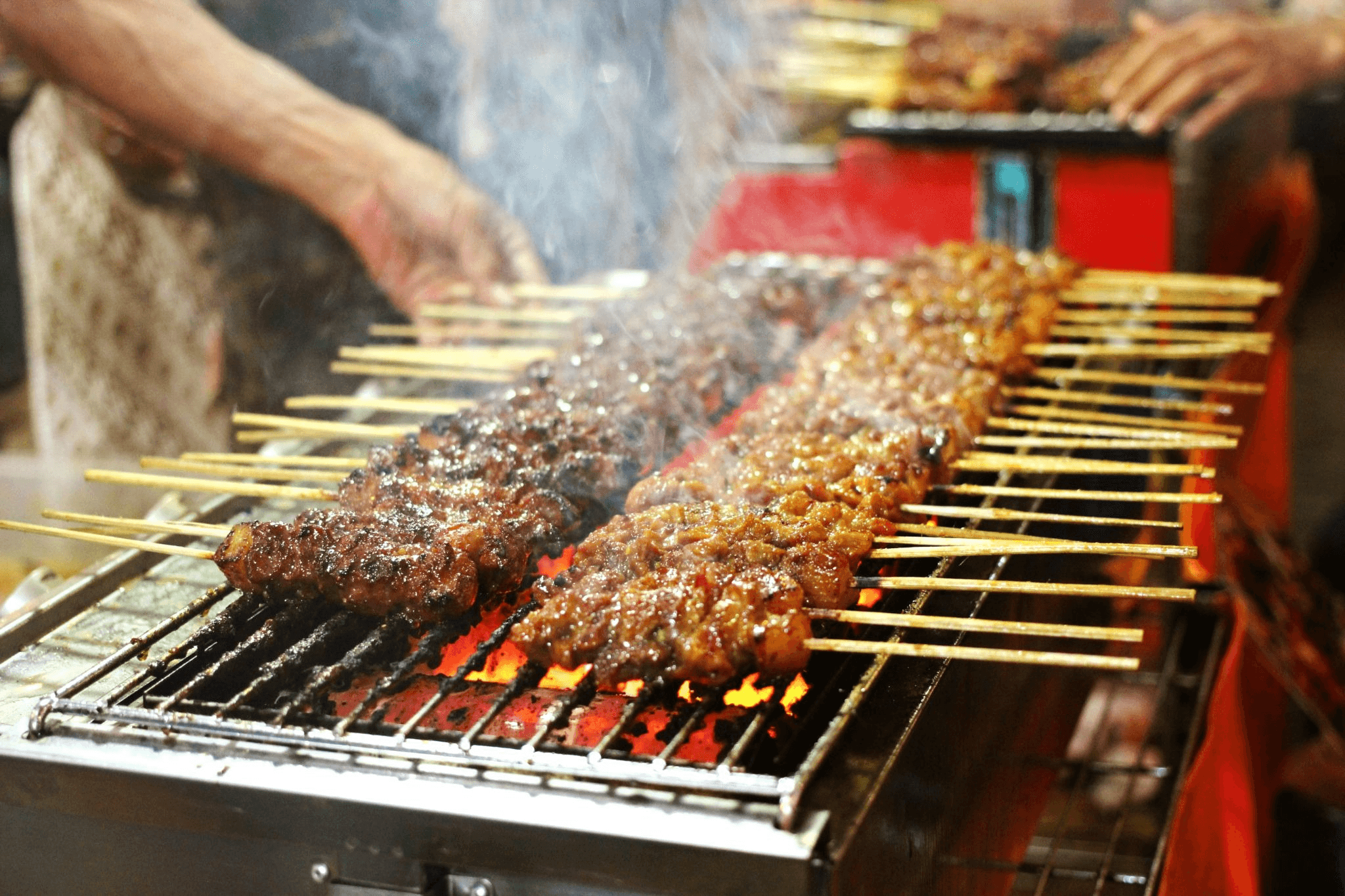
Satay is one of the most popular Indonesian dishes globally, and for good reason. Skewers of meat (chicken, beef, lamb, or goat) are marinated, grilled over charcoal, and served with a peanut or sweet soy dipping sauce. The smoky char from live coals is non-negotiable to the authentic experience.
Every region has its take. Sate Madura from East Java uses chicken or goat with a thick peanut sauce. Sate Padang from West Sumatra arrives drenched in a yellow curry sauce made from turmeric and offal broth. Sate Lilit from Bali wraps minced fish or pork around lemongrass stalks. Each version is its own distinct traditional Indonesian dish.
The cooking experience itself is part of the appeal. Street vendors fan skewers over small charcoal braziers, filling the surrounding air with a smoky aroma that announces their presence from a street away.
Read Also: Best 8 Indonesia Vacation Spots to Explore
3. Rendang

Rendang is not just a dish. It's a slow-cooked expression of Minangkabau philosophy. Originating in West Sumatra in the 16th century, it was developed as a preservation method: beef cooked for hours in coconut milk and spices until all the liquid evaporates and the meat is coated in a dark, intensely caramelized crust.
CNN Travel readers voted rendang the world's best food in both 2011 and 2017. The Indonesian government has been actively pursuing UNESCO Intangible Cultural Heritage recognition for it, calling it "a symbol of Indonesia's culinary identity."
The flavor is unlike anything else: deeply savory, slightly sweet, warmly spiced with galangal, lemongrass, kaffir lime leaves, and chilies, with a richness that builds slowly. Traditionally served at weddings and religious celebrations, it's now available across the country in Padang restaurants (rumah makan Padang), which are recognizable by towers of small dishes displayed in the window.
Real-world tip: At a Padang restaurant, you don't order from a menu. Servers bring every available dish to your table; you pay only for what you eat. It's one of the most efficient and delicious dining systems in the world.
4. Bakso

Bakso is the Indonesian answer to a perfect bowl of comfort. It's a clear beef broth soup loaded with springy meatballs made from a finely ground mixture of beef and tapioca starch. The result is a bouncy, dense ball with a satisfying chew that sets it apart from any other meatball soup tradition.
A full bowl typically includes egg noodles or rice vermicelli, tofu, fried wontons, and a soft-boiled egg, topped with celery, fried shallots, and chili sauce. Bakso vendors, often identifiable by the sound of two sticks tapping together, are a fixture in Indonesian cities and towns.
It's one of the most popular traditional Indonesian breakfast dishes, though many people eat it as an afternoon snack or late-night meal. President Obama famously mentioned missing bakso during his visit to Indonesia in 2010, cementing its status as a cross-cultural crowd-pleaser.
5. Gado-Gado

Gado-gado is Indonesia's most beloved vegetable dish, and one of the five official national foods. It's a warm salad of steamed or blanched vegetables, typically bean sprouts, water spinach, long beans, cabbage, potatoes, and cucumber. Then served with tofu, tempeh, and hard-boiled eggs, all drenched in a rich peanut sauce.
The peanut sauce is what makes it. Made with ground roasted peanuts, palm sugar, tamarind, garlic, and chilies, it's sweet, savory, tangy, and nutty at once. Prawn crackers are added for crunch. The name "gado-gado" itself loosely translates to "mix-mix", a reference to the casual combination of whatever vegetables are on hand.
It's a genuinely satisfying meal for vegetarians and one of the best examples of how Indonesian vegetable dishes can be as bold and complex as any meat-based dish.

6. Gudeg
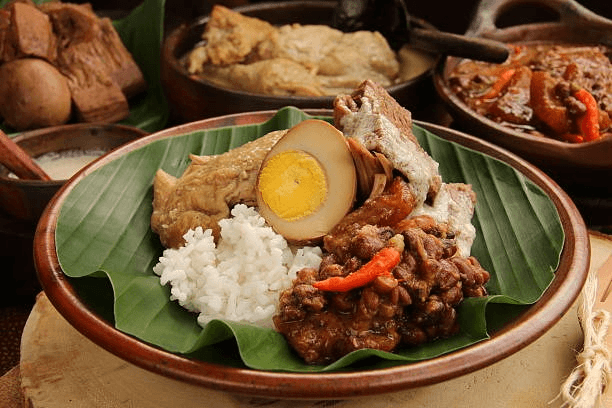
Gudeg is the defining dish of Yogyakarta, and it's unlike anything else in Indonesian cuisine. Young green jackfruit is braised for hours in coconut milk with palm sugar, bay leaves, and galangal until it turns a deep reddish-brown and takes on an almost sweet, jammy consistency.
It's a classic Indonesian dish that surprises first-timers. The jackfruit becomes tender and absorbs the sweet coconut broth entirely, losing all trace of its original flavor. Gudeg is typically served with rice, a hard-boiled egg cooked in coconut milk (telur pindang), chicken, tofu, and krecek, a spicy, crispy beef skin stew that cuts through the sweetness.
Gudeg is a common traditional Indonesian breakfast dish in Yogyakarta, eaten in the early morning at warungs that open before dawn. For many travelers, a 4 AM bowl of gudeg is one of the most memorable culinary experiences in the country.
Read Also: 10 Authentic Indonesian Dishes You Can’t Find in Singapore
7. Pempek

Pempek comes from Palembang in South Sumatra, and it has a devoted following that travels specifically to eat it at the source. These fish cakes are made from ground fish (traditionally tenggiri, a type of mackerel) mixed with tapioca starch, then shaped into cylinders, stuffed with egg, and deep-fried or boiled.
The key to pempek is not the cake itself. It's the cuko sauce it's served with: a sharp, dark vinegar-based liquid spiked with palm sugar, garlic, and bird's eye chilies. The combination of chewy fish cake and tangy-spicy cuko is addictive.
Different shapes carry different names: kapal selam (submarine) contains a whole egg; lenjer is a plain cylinder; adaan is round and crispy. Pempek is sold across Indonesia, but Palembang locals will tell you, correctly, that it tastes better at the source.
8. Martabak

Martabak comes in two completely different versions that share only the name and the pan.
Martabak Telur (savory) is a crispy, flaky pan-fried parcel filled with spiced ground beef or mutton, egg, and spring onions. It's thought to have arrived through Arab and Indian Muslim traders, and remains a fixture at night markets across the country.
Martabak Manis (sweet) is a thick, pillowy pancake cooked in a cast-iron pan until it forms a caramelized base, then filled with butter, sugar, chocolate sprinkles, cheese, or peanuts. Or all of the above. It's one of Indonesia's most popular street desserts and a must-try for anyone with a sweet tooth.
Both versions are cooked fresh to order. Watching a martabak vendor fold and fill one is half the entertainment.
9. Pisang Goreng

Pisang goreng, or fried banana, might sound simple. In Indonesia, it's an art form.
Ripe plantains are coated in a light batter (sometimes with a touch of rice flour for extra crispiness) and fried until golden. The outside is crisp, but the inside turns soft, sweet, and almost custardy. They're eaten as a snack at any time of day, sold from small carts and market stalls across the archipelago.
Regional upgrades abound. In Bandung, pisang goreng is topped with cheese and chocolate drizzle. In Pontianak (West Kalimantan), pisang goreng Pontianak is made from a specific local banana variety and has earned a national reputation serious enough to be boxed and brought home as a souvenir.
It's one of the most accessible entry points into Indonesian street food: cheap, universally available, and impossible to dislike.
10. Rawon
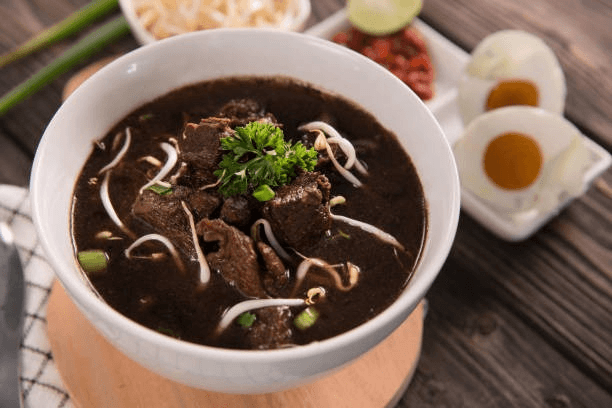
Rawon is one of the most distinctive and underrated classic Indonesian dishes. A jet-black beef soup from East Java, its color comes entirely from kluwek (the fermented seed of the kepayang fruit), which gives it a deeply earthy, slightly nutty flavor with no parallel in other cuisines.
The broth is built on a spice paste of shallots, garlic, galangal, lemongrass, and turmeric before the kluwek transforms it. Tender chunks of beef short rib simmer in it for hours. The bowl arrives topped with bean sprouts, salted egg, fried shallots, and a squeeze of lime.
Rawon is a traditional Indonesian breakfast dish in Surabaya, where locals line up early at warung rawon for a bowl before starting the day. The color alone is dramatic enough to make it one of the most photographed dishes in Indonesian food culture.
Read Also: 10 Things to Know Before Visiting Indonesia: A Practical Guide for Your First Trip
Eat Well, Sleep Well: Fuel Your Culinary Journey with Bobobox

Indonesia's flavors are waiting. The only question is where you start. Chasing Indonesia's best food means moving between cities, catching early flights, and making the most of every hour. That's where the right accommodation makes all the difference.
For travelers flying in and out of Jakarta, Bobopod Airport CBC in Tangerang is steps from Soekarno-Hatta International Airport, with a free shuttle service that means you're never rushing to your gate. It's the ideal base for early-morning departures or late arrivals. Rest well, then get back out there to eat.
Further afield, Bobopod and Bobocabin locations beyond place you in the middle of Indonesia’s most spectacular landscapes, each with local food scenes worth exploring in their own right. From gudeg breakfasts in Yogyakarta to Manado’s exotic food near Bunaken, the food map of this archipelago is inexhaustible.
Not sure which Indonesian destination matches your travel personality? Take the DMDU Quiz for personalized travel recommendations based on who you actually are as a traveler.
Ready to book your stay? Download the Bobobox app to find the nearest pod or cabin, check deals, and manage your booking in one place.
Header Image by: KamranAydinov via Magnific
Writer: Syifa Nuri Khairunnisa